
Something has shifted in the way people talk about mental health lately. Quietly, almost cautiously.
A few years ago, conversations around PTSD or severe anxiety still carried a kind of stiffness to them. People spoke in half-sentences. Changed the subject midway through explaining how exhausted they felt. Smiled while describing panic attacks. Which, honestly, says a lot about how deeply people learn to hide discomfort.
Now? There’s a little more honesty in the room.
Not because suffering has disappeared. Far from it. But because more people are realizing that traditional treatment paths do not always work the way they hoped they would.
And that realization — uncomfortable as it can be — is part of why interest in ketamine therapy in Chicago has grown so quickly.
Not as a trend. Not as a miracle cure either.
Mostly as another doorway. One that some people reach after years of feeling emotionally pinned in place.
What Is Ketamine Therapy, Really?
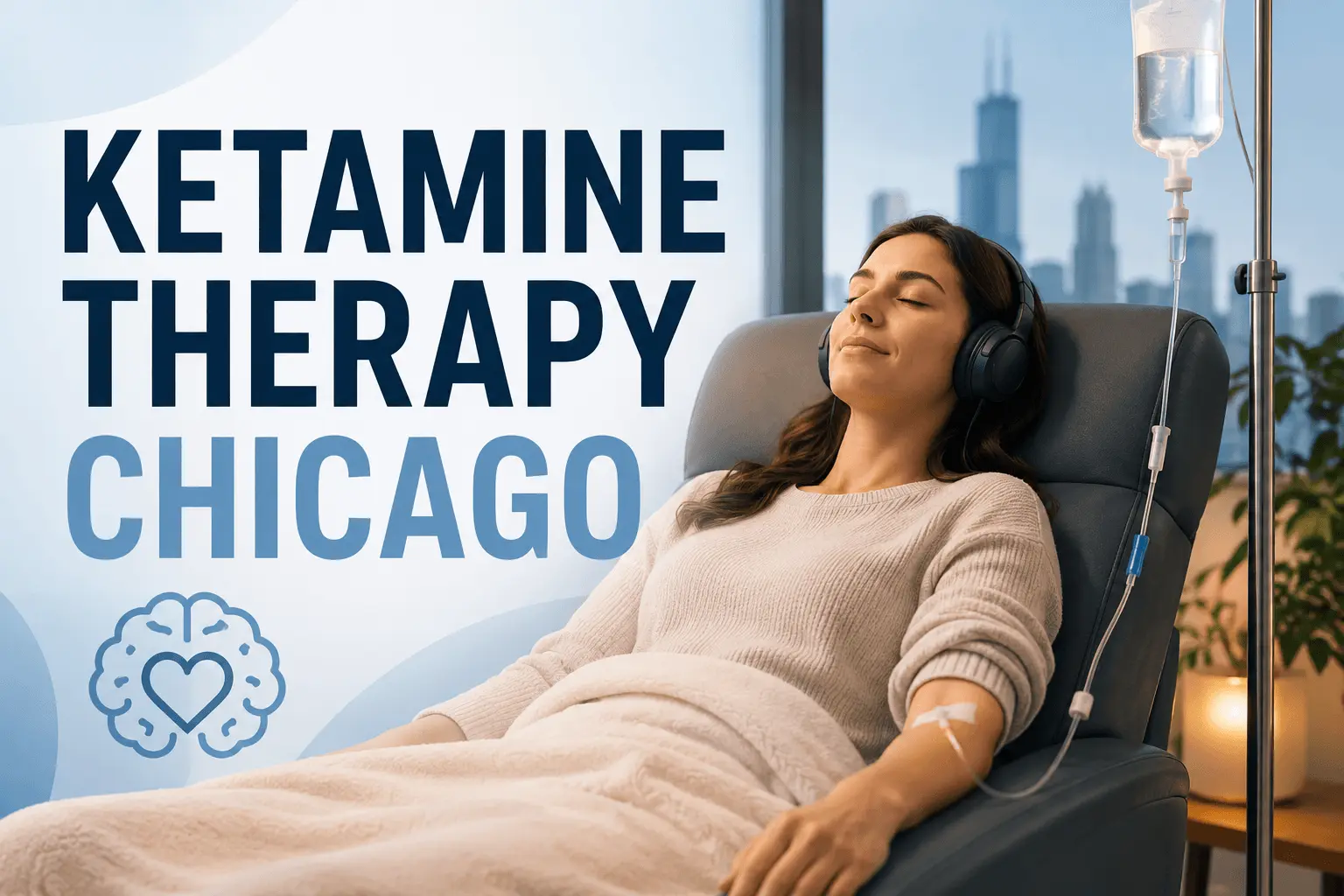
At its core, ketamine therapy involves carefully monitored doses of ketamine administered in a clinical setting, often through IV infusion. Originally developed as an anesthetic decades ago,
ketamine has since drawn significant medical attention for its potential mental health benefits — especially for treatment-resistant conditions.
The important part here is “treatment-resistant.”
Because many patients exploring ketamine treatment in Chicago are not casually shopping for wellness trends. They’ve often already tried medications, therapy, lifestyle changes, meditation apps, and sleep routines. Sometimes all at once. Sometimes for years.
And eventually, exhaustion settles in.
Not dramatic exhaustion. The quieter kind.
The kind where someone says, “Nothing seems to stick anymore,” and means it.
Research from organizations like the National Institute of Mental Health and studies published through Harvard Health Publishing continue to explore how ketamine may rapidly affect neural
pathways tied to mood regulation, trauma responses, and chronic pain processing.
Which sounds clinical. Because it is.
But underneath the neuroscience is something more human: the possibility of relief arriving faster than expected.
Sometimes, within hours or days instead of months.
That possibility matters to people who have spent years feeling emotionally underwater.
Why PTSD Patients Are Looking at Ketamine Therapy Differently
PTSD changes the nervous system in ways outsiders often underestimate.
It is not simply “remembering something bad.” The body itself starts anticipating danger constantly. Sleep changes. Trust changes. Even ordinary sounds or crowded grocery stores can feel strangely sharp around the edges.
And traditional therapy, while incredibly valuable, can sometimes move slowly for patients whose nervous systems never fully power down.
This is where ketamine therapy enters the conversation more often now.
Not as a replacement for therapy. More like a bridge that may help patients become emotionally reachable again.
Some clinicians describe it as creating flexibility in the brain — a temporary opening where thought patterns feel less rigid, less trapped inside the same painful loops.
That opening can matter enormously for trauma patients.
At Chicago IV Solution, treatment plans are designed around individualized care because PTSD rarely looks identical from one person to another. Some patients struggle with emotional
numbness. Others with hypervigilance. Others simply feel tired all the time in a way that sleep cannot fix.
Trauma has strange ways of reshaping daily life. Quiet ways, mostly.
And healing rarely happens in straight lines.
Anxiety Can Become Physically Exhausting
People often describe anxiety as “mental,” but chronic anxiety tends to spill into the body eventually.
Jaw tension. Digestive issues. Racing heartbeats during completely ordinary conversations. Sleeplessness that somehow makes mornings feel emotionally loud before the day even begins.
There’s also the fatigue nobody talks about enough.
Being anxious for long periods is tiring. Profoundly tiring. That’s one reason patients seeking anxiety treatment sometimes explore ketamine infusion therapy after conventional medications stop feeling effective or produce difficult side effects.
Ketamine appears to work differently from standard antidepressants or anti-anxiety medications. Rather than slowly adjusting serotonin levels over months, ketamine interacts with glutamate
systems connected to neuroplasticity — essentially the brain’s ability to form and reorganize connections.
Again, highly scientific language for something deeply personal.
The feeling many patients describe afterward is not euphoria. That’s a misconception.
More often, it sounds like this:
“A little quieter.”
Which may not sound dramatic unless someone has lived for years inside relentless mental noise.
Chronic Pain and Emotional Pain Often Overlap
This part surprises many people at first.
Chronic pain and mental health conditions frequently feed into each other. Anxiety can amplify pain perception. Pain can intensify depression. Poor sleep worsens both. The cycle becomes
difficult to untangle.
Fibromyalgia, migraines, CRPS, nerve pain — these conditions often carry emotional exhaustion alongside physical symptoms.
And after enough unsuccessful treatments, patients sometimes begin doubting themselves entirely.
That emotional erosion can become its own burden.
Ketamine therapy has increasingly been studied for chronic pain management because of how it interacts with pain receptors in the nervous system. For some patients, it may help reduce pain intensity while also improving mood and emotional resilience.
Not perfectly. Not universally.
But enough that many pain specialists are paying closer attention now.
At Chicago IV Solution, chronic pain treatment is approached with the understanding that physical suffering rarely exists in isolation. Patients are not simply symptoms attached to charts. They are people trying to reclaim ordinary moments again.
Walking comfortably. Sleeping normally. Sitting through dinner without discomfort dominating the experience.
Small things become enormous after chronic pain.
Is Ketamine Therapy Safe?
For appropriately screened patients under medical supervision, ketamine therapy is generally considered safe. But it is still a serious medical treatment — not something casual wellness culture should flatten into buzzwords.
Patients may experience temporary side effects such as nausea, dizziness, elevated blood pressure, or dissociation during treatment sessions. That last one tends to sound frightening at first, though many describe it more as a dreamlike detachment that fades afterward.
Good clinics prepare patients carefully beforehand. That matters.
Safety also depends heavily on medical oversight, dosage protocols, screening processes, and individualized planning. Which is why choosing an experienced provider matters far more than flashy marketing language.
A thoughtful clinic tends to move carefully. Ask questions thoroughly. Avoid overpromising.
Honestly, that restraint is usually a good sign.
Who Usually Considers Ketamine Therapy?
The short answer: people who feel stuck.
Some arrive after years of antidepressants that stopped helping. Others, after trauma therapy, plateaued. Some are navigating chronic pain that has slowly narrowed their lives smaller and smaller over time.
And some simply reach a point where surviving no longer feels sufficient.
That’s often the emotional undercurrent beneath these decisions.
Not desperation exactly. More like fatigue mixed with cautious hope.
Patients considering ketamine therapy in Chicago typically begin with a consultation process to evaluate medical history, symptoms, goals, and overall suitability for treatment.
Because good care is rarely one-size-fits-all.
The body is complicated. The nervous system, even more so.
A Different Kind of Conversation Around Healing
Perhaps the most interesting thing about the rise of ketamine therapy is not the treatment itself.
It’s the honesty surrounding it.
People are becoming more willing to admit when traditional paths have not fully helped them. More open to nuanced conversations about mental health. More comfortable acknowledging that healing can look layered and imperfect and nonlinear.
Which feels healthier somehow.
Not every patient responds the same way to ketamine therapy. Some experience profound improvement. Others notice subtler shifts. Some need integrated support through therapy, lifestyle changes, or continued medical care alongside treatment.
Still, for many patients in Chicago navigating PTSD, anxiety, depression, or chronic pain, ketamine therapy has become something important:
A possibility.
And sometimes possibility — even before certainty arrives — changes the emotional atmosphere around recovery in ways that are difficult to measure, but very easy to feel.