
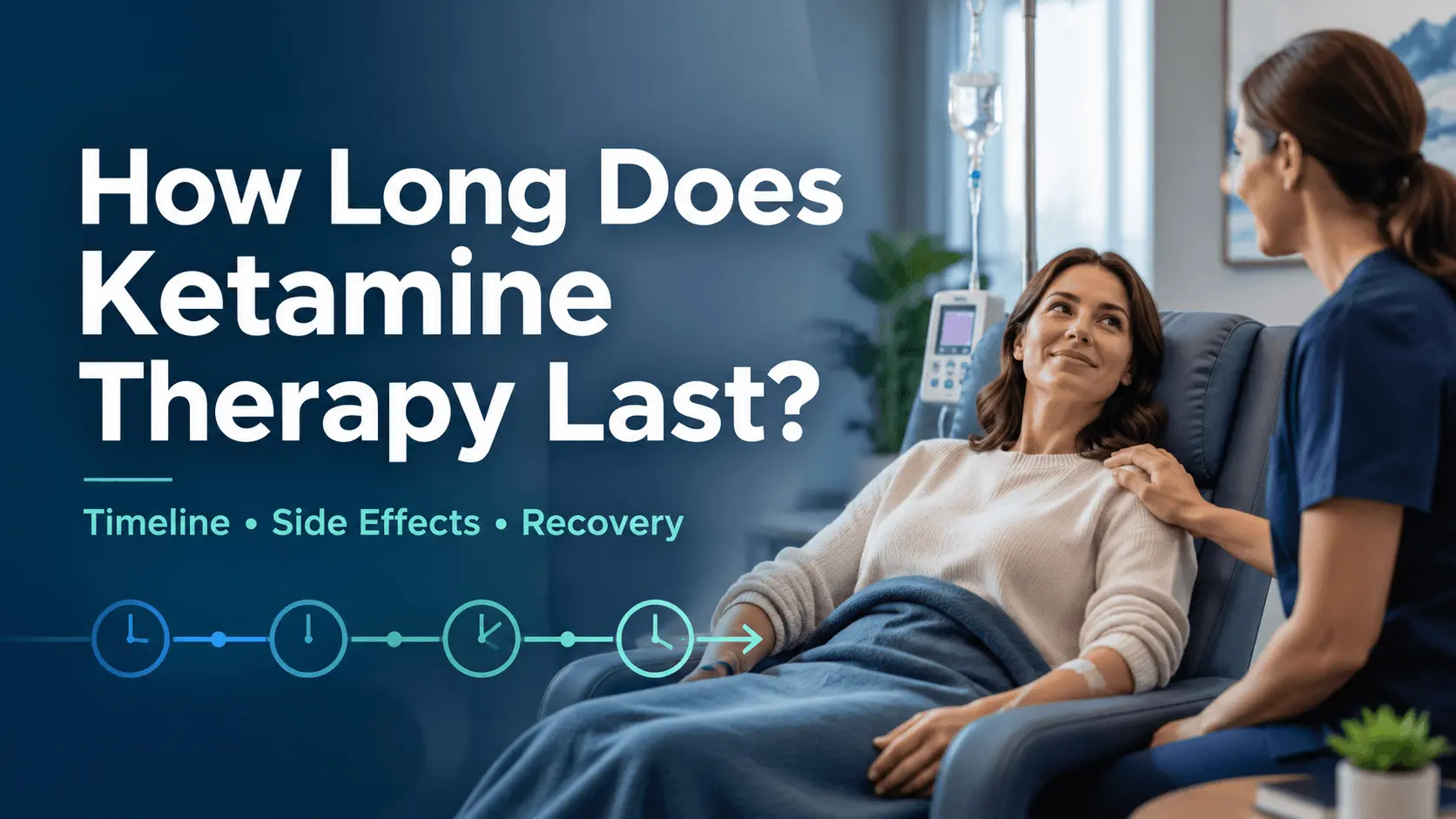
For many people living with depression, PTSD, anxiety, or chronic pain, ketamine therapy represents a different path, especially when conventional treatments haven’t provided enough relief. Yet one of the first questions patients ask isn’t just whether it works, but how long ketamine therapy lasts.
The answer isn’t the same for everyone. The duration of ketamine’s effects depends on several factors, including the condition being treated, the severity of symptoms, your response to treatment, and whether you complete the recommended series of infusions. Understanding what to expect before, during, and after treatment can help you make a more informed decision.
How Long Does Ketamine Therapy Last?
Ketamine itself leaves the body within hours, but its therapeutic effects often last much longer. Many patients begin noticing improvements within hours or days after an infusion, particularly when receiving treatment for depression. For others, especially those with chronic pain or PTSD, improvements may develop more gradually over several sessions.
After an initial treatment series, typically six infusions over two to three weeks, many patients experience relief that lasts from several weeks to several months. Some continue to feel well without additional treatment for an extended period, while others benefit from maintenance or “booster” infusions based on their symptoms and their provider’s recommendations.
Rather than offering a temporary mood boost, ketamine appears to promote changes in brain activity and neural connections that may continue after the medication has been metabolized. This is one reason its benefits can outlast the presence of the drug itself.
What Influences How Long Results Last?
No two patients have identical experiences. Several factors can influence the duration of symptom relief.
The condition being treated plays an important role. Depression, PTSD, anxiety disorders, and chronic pain each respond differently to treatment.
Symptom severity also matters. Individuals with longstanding or treatment-resistant conditions may require a longer induction phase or periodic maintenance infusions.
Completing the recommended treatment plan is another key factor. While some patients notice improvement after a single session, lasting benefits are generally associated with completing the initial infusion series recommended by the treating clinician.
Lifestyle, ongoing therapy, sleep quality, stress levels, and overall health may also influence how well improvements are maintained over time.
What to Expect After a Ketamine Infusion
Understanding what to expect after a ketamine infusion can make the recovery process feel much more predictable.
Immediately after treatment, most patients spend a short observation period at the clinic while the medication’s immediate effects wear off. Because ketamine can temporarily affect coordination, judgment, and reaction time, patients should arrange for someone to drive them home.
Some people feel deeply relaxed after treatment, while others describe feeling mentally lighter or emotionally calmer. It’s also common to experience temporary fatigue for the remainder of the day.
Many providers recommend avoiding important decisions, operating machinery, drinking alcohol, or returning to work until the following day.
Over the next several days, patients may begin noticing subtle changes in mood, motivation, sleep, or anxiety levels. For others, improvements become more noticeable after multiple infusions rather than immediately following the first treatment.
Ketamine Therapy Side Effects: What Is Normal?
Like any medical treatment, ketamine therapy side effects are possible, although they are generally short-lived when therapy is administered in a controlled medical setting.
Common temporary side effects include:
- Mild dizziness
- Nausea
- Blurred vision
- Drowsiness
- Temporary increase in blood pressure
- A feeling of detachment or altered perception during the infusion
These effects usually resolve within a few hours after treatment.
Healthcare providers carefully monitor patients throughout each infusion to ensure comfort and safety. If side effects occur, they can often be managed by adjusting the infusion rate or
providing supportive care.
Patients should always discuss their medical history, current medications, and any concerns with their healthcare provider before beginning treatment.
Understanding Ketamine Therapy Success Rate
Another common question involves the ketamine therapy success rate.
While published research has shown encouraging outcomes for many individuals with treatment-resistant depression and certain other conditions, success should not be measured simply by symptom elimination.
Some patients experience significant improvement after the initial series of infusions. Others notice more gradual changes, such as improved emotional resilience, better sleep, reduced
anxiety, or increased ability to participate in daily life and psychotherapy.
It’s also important to recognize that ketamine therapy is not a cure. Instead, it is often one component of a broader treatment plan that may include psychotherapy, medication management, lifestyle changes, and ongoing follow-up care.
Setting realistic expectations helps patients evaluate progress more accurately and work collaboratively with their treatment team.
Why Maintenance Treatments May Be Recommended
One misconception is that ketamine therapy is a one-time treatment.
In reality, many patients benefit from maintenance infusions after completing the initial treatment series. These booster sessions are not scheduled according to a fixed calendar but are typically
based on symptom recurrence and clinical evaluation.
The goal is to maintain symptom relief while avoiding unnecessary treatments. Some individuals may need boosters every few weeks, while others remain stable for several months before additional treatment becomes appropriate.
Your provider will monitor your progress and recommend a maintenance schedule tailored to your individual response.
Is Ketamine Therapy Right for Everyone?
Ketamine therapy has shown promise for individuals with treatment-resistant depression, PTSD, anxiety disorders, chronic pain syndromes, and certain other conditions. However, it is not appropriate for everyone.
Before treatment begins, a comprehensive medical evaluation helps determine whether ketamine therapy is a suitable option based on your medical history, current medications, diagnosis, and overall health.
Receiving treatment at an experienced clinic ensures careful screening, individualized dosing, continuous monitoring, and follow-up care throughout the treatment process.
A Thoughtful Approach to Long-Term Relief
If you’re wondering how long ketamine therapy lasts, the most accurate answer is that it varies from person to person. While the medication itself is short-acting, its therapeutic effects may
continue well beyond the infusion, particularly when treatment is part of a comprehensive care plan.
Understanding the expected timeline, recognizing common side effects, and maintaining realistic expectations can help you approach treatment with greater confidence. Working closely
with an experienced provider also allows your treatment plan to evolve as your needs change, giving you the best opportunity for sustained symptom relief rather than temporary improvement.
Ready to take the next step? Visit the Chicago IV Solution Contact Page to schedule your complimentary consultation and connect with their experienced medical team.