
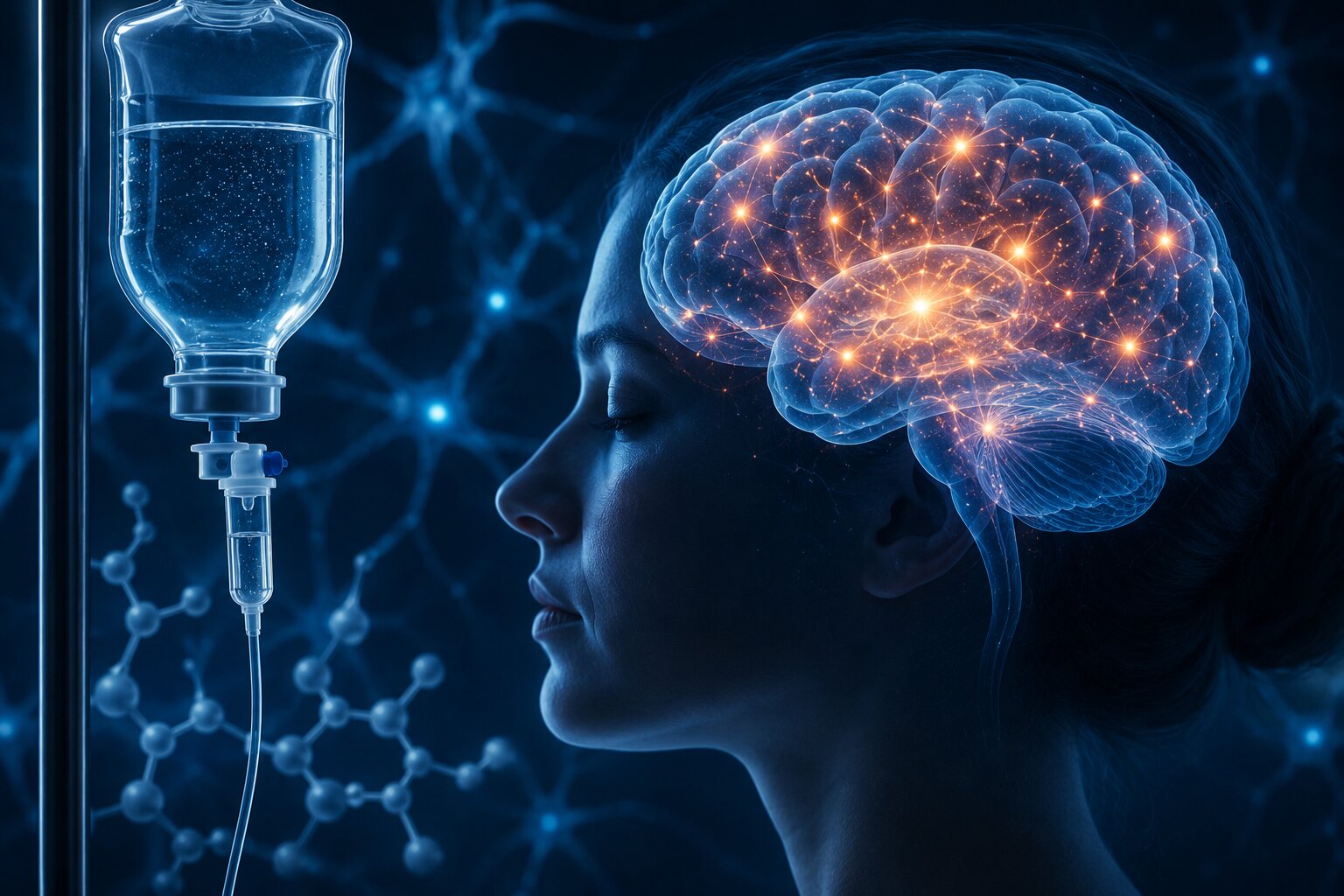
Something strange happens when people live with depression or PTSD for a long time. The brain begins conserving energy in all the wrong places.
Thoughts loop. Sleep shifts into something thin and unreliable. Joy becomes intellectual instead of felt. Even good moments can arrive with a strange distance around them, like watching life through thick glass. And after enough time, many patients stop asking whether they feel happy. They start asking whether they feel anything at all.
That part tends to stay quiet in medical articles.
Most people searching for ketamine treatment in Chicago are not looking for a trend or miracle cure. Usually, they are tired. Tired of trying medications that worked for a while until they didn’t. Tired of carrying anxiety in the body every waking hour. Tired of explaining trauma symptoms to people who say things like “just stay positive,” which… well. Easier said than done.
Ketamine therapy has entered that conversation carefully over the last several years. Not as magic. Not as hype. More like a different doorway, researchers did not fully expect to find.
And the interesting part is this: ketamine appears to affect the brain differently than traditional antidepressants.
Ketamine Works on Different Brain Pathways Than Most Antidepressants
The short answer? Ketamine primarily affects glutamate activity in the brain rather than focusing only on serotonin.
That matters more than it may sound.
Traditional antidepressants often work through serotonin or dopamine systems and can take weeks to build noticeable effects. Sometimes longer. For some patients, they help significantly. For others, not much changes except side effects and frustration.
Ketamine appears to operate through the brain’s glutamate system, which is closely tied to learning, memory, neural communication, and adaptability. Researchers believe this may help explain why some patients experience symptom relief more rapidly during ketamine IV therapy.
Not permanently. Not perfectly. But sometimes enough to interrupt the cycle. And honestly, that interruption can matter.
The brain is not static. It is constantly rewiring itself based on stress, emotion, experience, sleep, trauma, relationships, and even isolation. Depression and PTSD can slowly narrow those pathways over time. Thoughts become repetitive because the brain becomes repetitive.
Ketamine seems to temporarily loosen that rigidity.
A little like opening windows in a room that has been closed for years.
What Happens in the Brain During Ketamine Therapy?
Researchers believe ketamine blocks NMDA receptors, which then influences glutamate release and stimulates new neural connections.
That is the scientific explanation. The lived experience feels less clinical.
Some patients describe feeling mentally quieter after treatment. Others say that stressful thoughts no longer feel welded to the center of consciousness. Trauma memories may still exist, but the emotional charge surrounding them sometimes softens temporarily.
Not erased. Just… less consuming.
Brain imaging studies have shown that depression and PTSD can affect communication between key regions of the brain, including:
- The amygdala, which processes fear and emotional threat
- The prefrontal cortex, responsible for reasoning and emotional regulation
- The hippocampus, which helps organize memory
In PTSD, especially, the brain can become stuck in survival mode. The nervous system continues scanning for danger even when no danger exists. That constant hypervigilance exhausts people quietly. Sometimes physically.
According to the National Institute of Mental Health, PTSD can affect memory, mood, sleep, emotional regulation, and daily functioning for years after trauma exposure.
Ketamine therapy is being studied because it may temporarily improve communication between these affected brain regions while promoting neuroplasticity. In simpler language, the brain may become more flexible again.
That flexibility matters in mental health recovery more than most people realize.
Why Some Patients Feel Relief So Quickly
One reason ketamine treatment has received attention is the speed at which some patients notice changes.
Traditional antidepressants often require consistent daily use before effects appear. Ketamine infusions work differently. Some patients report reduced depressive symptoms within hours or days after treatment.
That can sound unbelievable to people who have spent years cycling through medications.
Still, expectations matter here. Ketamine is not universally effective, and it is not intended to replace comprehensive mental health care. Some patients respond strongly. Others experience moderate improvement. Some need maintenance sessions over time.
The brain is complicated. Trauma, even more so.
But researchers increasingly believe ketamine’s rapid effects may come from its ability to support synaptic growth and neural connectivity. Chronic stress can weaken those connections. Ketamine may help stimulate repair processes that depression disrupts.
There is something quietly hopeful about that idea. The possibility that the brain retains some capacity to reconnect even after years of emotional exhaustion.
What Does Ketamine Therapy Actually Feel Like?
This question sits underneath almost every consultation, even when people are too nervous to ask directly.
Most ketamine IV therapy sessions are calm, medically supervised, and intentionally low stimulation. Patients remain monitored throughout treatment while receiving a carefully controlled infusion.
Experiences vary, but many people report:
- A dreamlike or floating sensation
- Altered perception of time
- Emotional distance from anxious thoughts
- Deep relaxation
- Temporary dissociation
The dissociation part can sound intimidating at first. But in clinical settings, some patients describe it as surprisingly relieving. Almost like stepping outside constant mental noise for the first time in years.
Not euphoric necessarily. Just quieter.
And sometimes that quiet creates space for therapy, emotional processing, or simply rest. Real rest. The kind trauma often prevents.
The National Library of Medicine has published growing research exploring ketamine’s role in treatment-resistant depression and PTSD, though experts continue studying long-term outcomes and ideal treatment approaches.
Who Is Ketamine Therapy Usually Recommended For?
Ketamine therapy is often explored for people experiencing treatment-resistant depression, PTSD, anxiety disorders, or chronic pain conditions that have not improved through conventional approaches alone.
That phrase “treatment resistant” sounds clinical, but behind it are usually people who have tried very hard already.
Therapy. Medications. Lifestyle changes. Sleep routines. Exercise attempts that lasted three days before burnout returned again.
Sometimes families quietly stop understanding after enough time passes. Friends move on. Patients learn to function publicly while struggling privately.
This is partly why compassionate clinical environments matter so much during mental health treatment. People are not arriving as blank slates. They are arriving tired.
At Chicago IV Solution, treatment plans are designed around individualized care rather than one-size-fits-all protocols. Conditions like PTSD, depression, anxiety, migraines, and chronic pain often overlap in ways that are more connected than they first appear.
The nervous system does not separate emotional pain from physical stress nearly as neatly as medicine once believed.
Is Ketamine Therapy Safe?
When administered in a licensed medical setting, ketamine therapy is generally considered safe for appropriate candidates under professional supervision.
Patients are evaluated beforehand to determine medical suitability, mental health history, and treatment goals. Monitoring continues throughout infusions.
Some side effects can include:
- Nausea
- Dizziness
- Temporary blood pressure increases
- Fatigue afterward
- Mild dissociation during treatment
Most effects wear off relatively quickly after the session ends.
Still, ketamine therapy is not appropriate for everyone, which is why medical oversight matters. Responsible clinics prioritize screening, monitoring, and realistic expectations rather than exaggerated promises.
Honestly, that balance tends to build more trust than dramatic marketing ever could.
The Brain May Be More Adaptable Than People Think
Depression and PTSD often convince people that nothing inside them can change anymore. That healing belongs to other people. Healthier people. Luckier people.
But the brain remains adaptable throughout life. Modern neuroscience keeps circling back to that fact.
Not infinitely. Not instantly. But more than many people realize.
Ketamine therapy seems to tap into that adaptability in a way researchers are still trying to fully understand. For some patients, it becomes part of rebuilding emotional stability after years of feeling trapped inside repetitive suffering.
Slowly. Unevenly sometimes. Human recovery is rarely linear. Still, movement matters.
And for people who have spent years feeling emotionally stuck, even small movements can feel surprisingly significant.
If exploring ketamine treatment in Chicago feels like the next step, schedule a confidential consultation with Chicago IV Solution to learn more about personalized treatment options for depression, PTSD, anxiety, and chronic pain.