
Living with PTSD can feel strangely exhausting.
Not always in the dramatic, movie-scene kind of way people imagine. Often, it’s quieter than that. A racing heart during an ordinary conversation. A sudden wave of anxiety in a grocery store. The feeling of being constantly on guard, even when there is no obvious threat.
For many people, traditional treatments help. Therapy creates space to process experiences. Medications can reduce symptoms. Yet some spend years trying different approaches and still find themselves trapped in a cycle of hypervigilance, flashbacks, sleep disturbances, or emotional numbness.
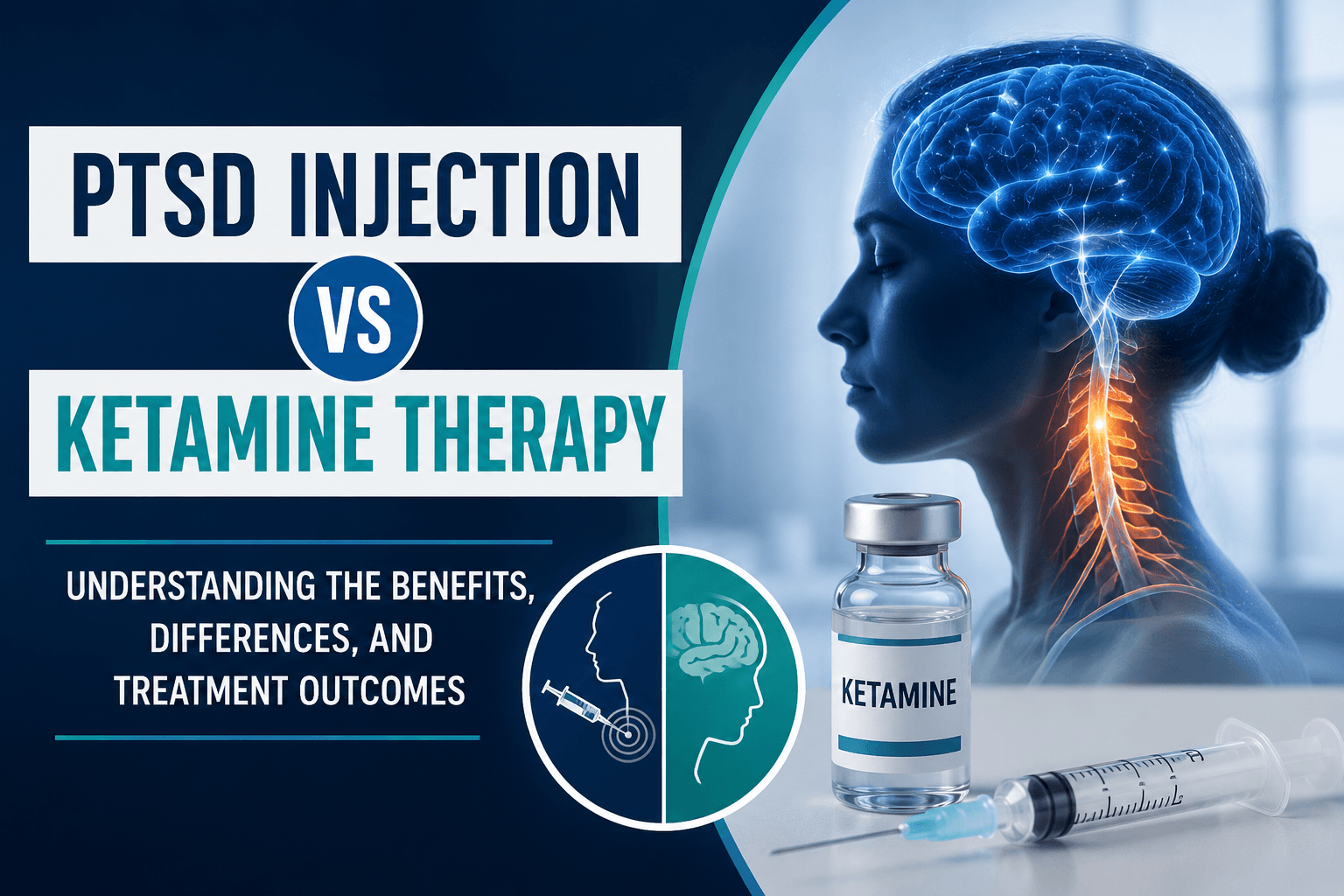
That reality has led many individuals to explore newer options, including PTSD injections such as Stellate Ganglion Block (SGB) and ketamine therapy. While both treatments are gaining attention, they work in very different ways.
Understanding those differences can make the path forward feel a little less overwhelming.
What Is a PTSD Injection?
A PTSD injection typically refers to a Stellate Ganglion Block (SGB), an innovative procedure designed to help regulate the body’s stress response.
The treatment involves injecting a local anesthetic near a collection of nerves in the neck called the stellate ganglion. These nerves are part of the sympathetic nervous system, often known as the body’s “fight-or-flight” system.
For many people with PTSD, that system can become stuck in overdrive. Even when danger has passed, the body may continue behaving as though a threat is present. Elevated stress hormones, increased anxiety, sleep disruption, and heightened alertness can become part of daily life.
An SGB procedure aims to interrupt that cycle.
The team at Chicago IV Solution’s PTSD injection program offers SGB as part of a comprehensive approach to trauma-related care.
What makes this treatment particularly interesting is that it focuses on the body’s physiological response to trauma rather than solely addressing psychological symptoms.
In a way, it acknowledges something many trauma survivors already know: trauma doesn’t only live in thoughts. It can live in the nervous system, too.
What Is Ketamine Therapy for PTSD?
Ketamine therapy takes a very different route.
Rather than targeting specific nerves, ketamine influences brain pathways involved in mood regulation, learning, memory, and emotional processing.
Research has shown that ketamine may help create new neural connections, a process often referred to as neuroplasticity. For individuals struggling with PTSD, depression, or anxiety, this
temporary window of increased flexibility may help the brain move beyond deeply ingrained patterns.
The goal isn’t simply symptom suppression.
Instead, ketamine therapy may help patients access therapeutic breakthroughs that previously felt out of reach.
Through personalized ketamine treatment programs, patients often combine ketamine therapy with ongoing mental health support and trauma-informed care.
And that combination matters.
Ketamine is not a magic switch. Despite what some headlines might suggest, meaningful healing often requires integration, reflection, and continued support after treatment.
The medication can open a door. Walking through it still takes intention.
How Do PTSD Injections and Ketamine Therapy Differ?
The biggest difference lies in what each treatment is trying to address.
PTSD injections such as SGB primarily focus on calming the body’s stress-response system. They target physiological symptoms linked to chronic activation of the sympathetic nervous system.
Ketamine therapy focuses more directly on brain function, emotional processing, and neural connectivity.
Someone experiencing severe hypervigilance, panic responses, and persistent fight-or-flight activation may find SGB particularly appealing.
Someone struggling with intrusive memories, depression, emotional numbness, or treatment-resistant symptoms may be a candidate for ketamine therapy.
Of course, real life rarely fits into neat categories.
Many individuals experience both physical and emotional symptoms simultaneously. That’s one reason comprehensive evaluations remain so important before beginning any advanced PTSD treatment.
Tools such as the Childhood Trauma Questionnaire (CTQ) can help providers better understand a patient’s trauma history and guide individualized care decisions.
Trauma rarely looks identical from one person to the next.
Treatment shouldn’t either.
Which Treatment Works Faster?
For many patients, SGB may produce noticeable changes relatively quickly.
Some individuals report reduced anxiety, improved sleep, and a calmer sense of awareness within days of treatment. Experiences vary, of course, but the rapid onset is one reason PTSD injections have attracted growing interest.
Ketamine therapy often follows a different timeline.
Some patients experience improvement after the first session, while others notice gradual changes over multiple treatments. The process can feel less immediate and more layered.
There is an interesting distinction here.
SGB often targets the body’s alarm system.
Ketamine often helps reshape how the brain processes emotional experiences.
Both can be valuable. They simply operate through different mechanisms.
Are PTSD Injections and Ketamine Therapy Safe?
Both treatments have established safety profiles when administered by qualified medical professionals.
SGB has been used in pain management and anesthesiology for decades. Side effects are generally temporary and may include mild soreness, temporary hoarseness, or changes in sensation around the injection site.
Ketamine therapy is also administered under medical supervision. Common side effects may include temporary dissociation, dizziness, nausea, or elevated blood pressure during treatment sessions.
The key factor isn’t necessarily the treatment itself.
It’s the quality of the assessment beforehand.
Organizations such as the U.S. Department of Veterans Affairs National Center for PTSD emphasize the importance of individualized treatment planning because PTSD presents differently across individuals.
Likewise, the National Institute of Mental Health highlights the value of a comprehensive mental health evaluation before selecting treatment options.
A thoughtful plan tends to outperform a rushed decision every time.
Who May Benefit Most From Each Approach?
People experiencing persistent physiological stress responses may be strong candidates for PTSD injections.
Those symptoms can include:
- Hypervigilance
- Sleep disruption
- Elevated startle response
- Chronic anxiety
- Physical tension associated with trauma
Ketamine therapy may be particularly beneficial for individuals dealing with:
- Treatment-resistant PTSD
- Co-occurring depression
- Emotional numbness
- Persistent intrusive thoughts
- Difficulty engaging with traditional therapy
In some cases, providers may recommend incorporating multiple approaches as part of a broader treatment strategy.
Healing is rarely linear.
Sometimes reducing the body’s stress response creates space for emotional work. Sometimes improving emotional processing makes physical symptoms easier to manage.
The relationship often goes both ways.
Choosing the Right Path Forward
The question isn’t necessarily whether PTSD injections or ketamine therapy are better.
The more useful question may be: Which treatment best aligns with a person’s unique symptoms, history, and goals?
That distinction matters.
PTSD is deeply personal. What brings meaningful relief for one individual may not be the right fit for another.
The encouraging news is that treatment options continue to evolve. Individuals who once felt stuck between therapy and medication alone now have access to innovative approaches that address both the mind and the nervous system.
For those exploring advanced trauma treatment, a comprehensive assessment is often the most important first step. Understanding how trauma affects both the brain and body can help create a more targeted, personalized path toward recovery.
And sometimes, after years of simply surviving, finding the right treatment isn’t about chasing a miracle.
It’s about finally giving the nervous system permission to exhale.
Ready to explore a different path to PTSD recovery? Learn more about PTSD Injection (SGB) treatment: Contact