

Learn how stellate ganglion block (SGB) for PTSD works, what clinical research shows, potential risks, and what to ask when considering treatment in Chicago.
For people living with post-traumatic stress disorder (PTSD), symptoms can continue to affect sleep, concentration, relationships, and everyday activities long after a traumatic event. When existing treatment has not provided enough relief, it is natural to ask what other options may be available.
One option attracting attention is stellate ganglion block (SGB) for PTSD. This procedure involves injecting a local anesthetic near a group of sympathetic nerves in the neck. Some clinical research has reported improvements in PTSD symptoms following SGB, while another controlled trial did not find a meaningful advantage over a sham procedure.
That distinction matters. SGB may be worth discussing with a qualified clinician, but the evidence does not establish it as a reliable treatment for everyone with PTSD. If you are researching a stellate ganglion block in Chicago, understanding the procedure, its limitations, and the questions to ask can help you make a more informed decision.
What Is a Stellate Ganglion Block?
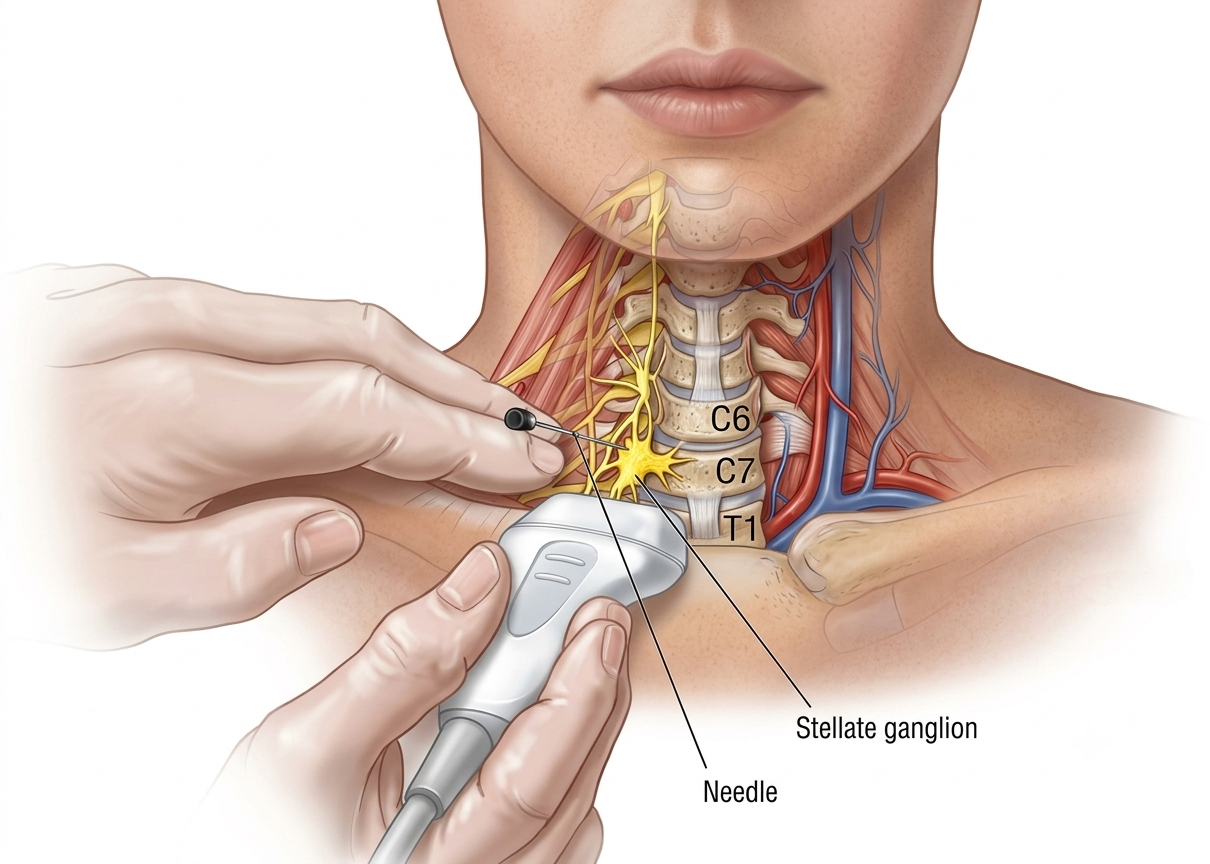
The stellate ganglion is a collection of sympathetic nerves located in the lower neck. These nerves form part of the autonomic nervous system, which regulates involuntary functions and contributes to the body’s responses to stress.
A stellate ganglion block involves injecting a local anesthetic near this nerve cluster to temporarily interrupt nerve signaling in the targeted area. Clinicians have used the procedure for certain pain conditions, and researchers have also investigated whether it may help reduce some symptoms associated with PTSD.
The proposed explanation involves the sympathetic nervous system, which plays a role in the body’s fight-or-flight response. Researchers are still studying how blocking these nerves might influence PTSD symptoms and why some patients may respond differently from others.
SGB does not erase traumatic memories, and it should not be described as a permanent reset of the nervous system. Its potential role in PTSD treatment remains an area of ongoing research.
Does Stellate Ganglion Block Help PTSD? What Research Shows
Research into SGB for PTSD has produced encouraging findings in some studies, but the results are not consistent enough to establish the procedure as a standard treatment.
The 2016 controlled trial
A randomized, double-blind study published in Regional Anesthesia and Pain Medicine compared stellate ganglion block with a sham procedure in military service members with PTSD. Researchers did not find a statistically or clinically meaningful difference between the treatment and control groups in the measured outcomes.
The findings raised questions about whether SGB offered a benefit beyond the effects associated with receiving a procedure and participating in a study.
Read the 2016 randomized controlled trial on PubMed.
The 2020 randomized clinical trial
A later multisite randomized clinical trial, published in JAMA Psychiatry, reported more favorable results. The study compared paired SGB treatments with a sham procedure in active-duty service members. Participants who received SGB experienced a greater reduction in PTSD symptom severity over the study’s eight-week assessment period.
The results supported further investigation into SGB as a possible treatment option. However, the study population and follow-up period limit how confidently the findings can be applied to every person with PTSD.
Read the 2020 SGB clinical trial on PubMed.
What do the clinical guidelines say?
The 2023 VA/DoD clinical practice guideline for PTSD concluded that there was insufficient evidence to recommend either for or against stellate ganglion block for PTSD. In other words, the guideline did not establish SGB as a recommended treatment based on the available evidence.
You can review the VA/DoD PTSD clinical practice guideline.
Taken together, these findings show why it is important to look beyond claims of rapid or guaranteed relief. SGB is a procedure under investigation for PTSD, and the available evidence does not establish how well it will work for a particular individual or how long any improvement might last.

Who Might Consider SGB for PTSD?
A PTSD diagnosis alone does not determine whether someone is an appropriate candidate for stellate ganglion block. Suitability depends on an individual’s medical history, symptoms, previous treatment, and the clinician’s assessment.
If you are considering SGB in Chicago, an evaluation should provide an opportunity to discuss:
- Which PTSD symptoms are affecting your daily life.
- Treatments you have already tried and how you responded.
- Your medical history, current medications, allergies, and any factors that could affect procedural safety.
- What benefits are realistic given the available evidence.
- How improvement would be evaluated and what alternatives are available if the procedure does not help.
Ask the clinician to explain why SGB may or may not be appropriate in your circumstances. A responsible assessment should address both potential benefits and limitations rather than assuming that the procedure is suitable for everyone.
What Happens During an SGB Procedure?
Stellate ganglion block is generally performed as an outpatient procedure. The exact process depends on the provider and the patient’s circumstances.
Before the injection: The clinician reviews your medical history, medications, allergies, and relevant health conditions. You should disclose any bleeding problems, previous reactions to anesthetics, and other information the medical team requests.
During the procedure: You are positioned to allow access to the lower neck. The clinician uses imaging guidance, commonly ultrasound or fluoroscopy, to help guide the needle toward the target area. A local anesthetic is then injected near the stellate ganglion.
After the injection: The medical team observes you for immediate effects and provides recovery instructions. Ask the clinic how long to allow for the appointment, what restrictions may apply afterward, and when follow-up will occur.
Temporary physical effects of the nerve block do not necessarily indicate that PTSD symptoms have improved. Follow-up should assess the changes that matter to the patient, such as sleep, heightened alertness, or the effect of symptoms on daily activities.
What Are the Risks of Stellate Ganglion Block?
An injection near the nerves and blood vessels of the neck requires appropriate training, careful technique, and an explanation of the potential complications.
Temporary effects can include a drooping eyelid, a hoarse voice, redness of the eye on the treated side, or a sensation of fullness in the throat. Bruising or soreness around the injection site may also occur.
Less common but potentially serious complications include bleeding, infection, injury to nearby structures, and pneumothorax, which occurs when air enters the space around a lung.
Individual risks vary. Before proceeding, ask the clinician which complications are relevant to your health, how the procedure will be guided, what monitoring is provided, and which symptoms after treatment require urgent medical attention.
You should have an opportunity to understand these risks and ask questions before giving consent.

Should SGB Replace Other PTSD Treatments?
SGB should not automatically replace established PTSD care. Trauma-focused psychotherapy and appropriate medications remain important treatment options, and a clinician can help determine whether an additional procedure belongs in an existing care plan.
If you are exploring SGB because your current treatment has not helped enough, discuss the decision with the healthcare professionals involved in your care. Do not stop prescribed medication or discontinue psychotherapy on your own.
The appropriate plan depends on the person’s symptoms, preferences, medical circumstances, previous treatment response, and the strength of the evidence supporting each option.
Considering Stellate Ganglion Block in Chicago?
Chicago IV Solution offers stellate ganglion block treatment for PTSD. If you are researching SGB in the Chicago area, you can review the clinic’s stellate ganglion block treatment information to learn more about its service.
A consultation is an opportunity to discuss your symptoms and medical history, understand the limitations of the evidence, and determine whether an evaluation for the procedure makes sense for you.
Before making a decision, ask about the clinician’s experience, the procedure’s potential benefits and complications, follow-up arrangements, and alternative treatment options. A clear discussion can help you understand what to expect without assuming that one procedure will work for everyone.
Explore the service: Visit Chicago IV Solution’s SGB treatment page for more information.
Stellate Ganglion Block Treatment in Chicago
Chicago IV Solution offers stellate ganglion block (SGB) treatment for PTSD. Learn more about the procedure, what to discuss during an evaluation, and whether it may be appropriate for your circumstances.
Learn more: SGB Treatment for PTSD.
For additional information and health-related articles, visit the Chicago IV Solution Blog or explore the Chicago IV Solution website.
Medical disclaimer: This article is for educational purposes only and does not replace individualized medical advice, diagnosis, or treatment. Evidence for stellate ganglion block as a PTSD treatment remains limited and mixed. Consult a qualified healthcare professional to discuss your circumstances and treatment options.