

Searching for a ketamine clinic in Chicago can produce plenty of choices, but a search result cannot tell you whether a particular provider is appropriate for your medical needs.
Ketamine treatment involves more than the infusion itself. A responsible program should include a medical evaluation, appropriate patient screening, a clearly defined treatment plan, monitoring during treatment, and instructions for recovery afterward.
That matters because ketamine is used in several different clinical settings. Ketamine itself is FDA-approved as an anesthetic, while intravenous ketamine for psychiatric conditions such as depression is generally an off-label use. Esketamine nasal spray is a separate medication with specific FDA-approved psychiatric indications.
So if you are comparing ketamine centers in Chicago, the better question is not simply, “Which clinic is closest?”
It is:
How does the clinic determine whether ketamine is appropriate for me, and what happens once treatment begins?
How Do You Choose a Ketamine Clinicin Chicago?
Choosing a ketamine clinic is about more than finding the closest location or the lowest price. You want to feel confident that you’re being properly evaluated, treated under qualified medical supervision, and supported throughout the process.
When comparing ketamine clinics in Chicago, look for a practice that takes time to understand your medical history, screens you appropriately, explains what treatment will involve, and monitors you throughout the session. It should also provide clear instructions for recovery and have a plan for checking how you’re responding to treatment.
Cost and convenience matter, but they shouldn’t come at the expense of safe, well-supervised care.
What Should You Look for in a Ketamine Clinic?
A reputable clinic should be able to answer some basic questions about how it approaches treatment, including:
- Medical evaluation: What does the clinic review before deciding whether ketamine treatment is appropriate for you?
- Clinical oversight: Who evaluates patients, prescribes treatment, administers it, and monitors them during the session?
- Treatment protocol: Why is a particular treatment approach being recommended, and what can you expect during a session?
- Patient monitoring: How are patients monitored during treatment and before they leave the clinic?
- Safety screening: What medical conditions, medications, or mental health factors could affect whether treatment is appropriate?
- Recovery instructions: What should you expect immediately after treatment, and what precautions should you take afterward?
- Follow-up: How does the clinic determine whether treatment is helping and whether the treatment plan needs to change?
- Coordination of care: When appropriate, will the clinic communicate or coordinate with your existing healthcare providers?
- Cost: What will the full treatment plan cost, including evaluation, treatment sessions, follow-up, and any other expected fees?
Taking the time to ask these questions can make it easier to compare clinics and find one whose approach fits your needs. The goal isn’t simply to find a place that offers ketamine; it’s to find a clinic that takes your safety, treatment goals, and ongoing care seriously.
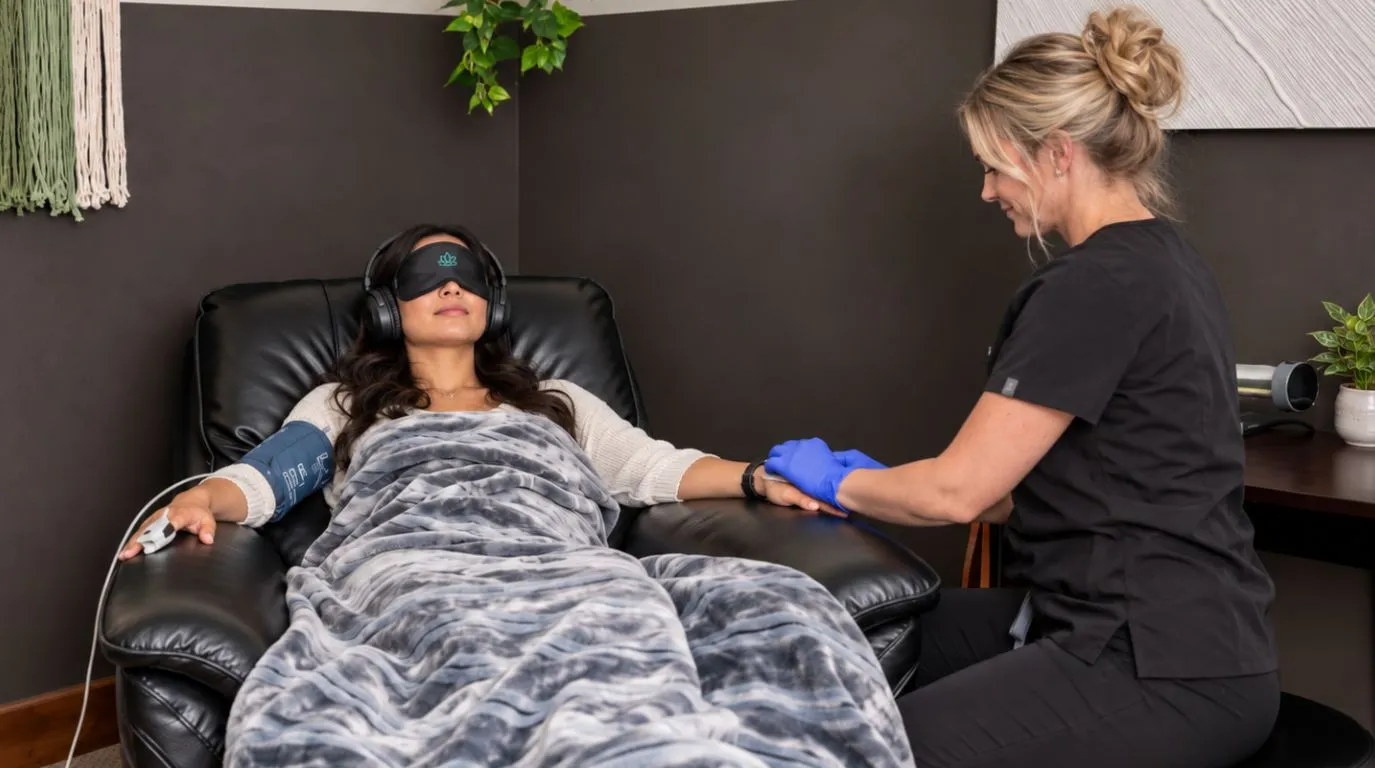
What to look for in a Chicago ketamine clinic
The best place to start is a medical evaluation.
Before receiving ketamine, you should expect a provider to review your medical and psychiatric history, current medications, previous treatments, and relevant risk factors. Ketamine is not appropriate for everyone. Conditions such as uncontrolled high blood pressure, certain cardiovascular problems, a history of psychosis, serious liver problems, and some substance-use concerns can affect whether treatment is advisable.
That initial conversation can tell you quite a bit about a clinic.
If the provider wants to understand why you are seeking treatment, what you have already tried, and what you hope to accomplish, you are getting information relevant to your care.
If the conversation is mainly about scheduling and payment before anyone has properly discussed your history, that deserves more scrutiny.
Current expert consensus guidance on intravenous ketamine for depressive disorders also emphasizes patient selection, safety, monitoring, and clinical decision-making.
Who will oversee your treatment?
A clinic’s name does not tell you who will actually be responsible for your care.
Ask who evaluates patients, who prescribes or orders treatment, who administers the infusion, and who monitors you during the session.
Chicago IV Solution says its team is led by Dr. Bal Nandra and describes a clinical team that includes registered nurses with ketamine infusion experience, licensed therapists, and technicians.
That is useful information to have when comparing providers.
You should be able to get similarly clear answers from any ketamine clinic Chicago patients are considering. Medical credentials and responsibilities should not be difficult to explain.
Ketamine treatment depends on what is being treated
There is no single ketamine protocol that applies to every condition.
Ketamine has been studied and used in treatment-resistant depression and certain pain conditions. It is also used off-label in some other psychiatric settings. The evidence, treatment goals, and protocols can vary depending on the condition being treated.
Chicago IV Solution currently offers separate programs for mental health and chronic pain. Its website lists conditions including depression, PTSD, anxiety, and chronic pain among the areas it treats.
That distinction is important when you speak with a provider.
A patient receiving treatment for depression should not assume that the same protocol will be used for chronic pain. Chicago IV Solution’s published information, for example, distinguishes its chronic-pain treatment from its mental-health program.
During a consultation, ask what condition the proposed treatment is intended to address and why that particular approach has been recommended.

Ketamine and esketamine are different treatments.
Patients researching ketamine therapy near me may encounter information about both ketamine and esketamine.
They are related medications, but they are not simply two names for the same treatment.
Ketamine is FDA-approved as an anesthetic. Intravenous ketamine used for psychiatric conditions such as depression is generally considered off-label. Esketamine, marketed as Spravato, is administered as a nasal spray and has specific FDA-approved psychiatric uses.
If a provider recommends ketamine treatment, ask which medication you will receive, how it will be administered, and why that option is being recommended for you.
That explanation should come before treatment, not after.
What happens during a ketamine infusion?
The treatment environment is another useful point of comparison.
Ketamine can temporarily affect alertness and perception. Possible short-term effects include dissociation, dizziness, nausea, blurred vision, and increased blood pressure.
For that reason, monitoring is an important part of the process.
Chicago IV Solution describes a private infusion room where the medication is administered through a small IV while the patient is monitored. The clinic says patients then spend time recovering in a quiet space before leaving with a pre-arranged ride.
Its published instructions say patients should have a responsible adult accompany them after treatment and that they should not drive themselves home.
If you are comparing ketamine infusion near me options, ask each provider what monitoring is used, who stays responsible for you during treatment, and what the discharge process involves.
Preparation matters too
The infusion may be the part patients think about most, but preparation can affect the appointment.
Chicago IV Solution’s current pre-infusion instructions tell patients not to eat or drink for four hours before treatment, except for prescription medication taken with a small sip of water when necessary. The clinic also provides specific post-treatment instructions and requires a responsible adult to accompany the patient home.
Those instructions are specific to that provider. Other clinics may have different requirements.
The point is to find out the rules before your appointment. Ask about food and drink restrictions, medications, transportation, and how much time you should set aside for the entire visit.

How long does ketamine treatment take?
There is no single answer because the appointment depends on the treatment being provided.
Chicago IV Solution describes a typical 45-minute infusion in its patient information, followed by approximately 30 to 45 minutes of recovery.
Its FAQ also says that its depression protocol consists of six infusions over approximately two weeks, while chronic-pain infusions can last considerably longer.
Those are the clinic’s published protocols, not a universal schedule for everyone receiving ketamine.
If you have work, childcare, or transportation to arrange, ask for the expected timeline before booking.
How will the clinic know whether treatment is helping?
This question is easy to overlook.
A ketamine treatment plan should have a clinical reason behind it. The provider should have some way of assessing your symptoms and deciding whether treatment is producing enough benefit to continue.
Current consensus guidance for IV ketamine in depressive disorders emphasizes individualized clinical decision-making rather than assuming that every patient should follow the same long-term schedule.
Chicago IV Solution currently describes an initial series of six infusions for its depression protocol, followed by maintenance treatment when appropriate.
That does not mean every patient needs the same number of treatments.
Ask what the provider will use to assess your response. It is equally reasonable to ask what happens if you do not improve as expected.
Look at the care around the infusion
Ketamine may be one part of a larger treatment plan.
Someone receiving treatment for depression may already have a psychiatrist or therapist. A person dealing with chronic pain may be working with a primary care physician or pain specialist.
Chicago IV Solution also offers ketamine integration coaching, with a preparation session and additional coaching sessions during the treatment process.
If you already have healthcare providers involved in your care, ask how the ketamine clinic approaches coordination with that treatment.
You can also review the provider’s ketamine integration coaching program to understand what additional support is available.
Compare the total cost, not just one infusion
Cost is another area where online comparisons can be misleading.
The price of one infusion does not necessarily represent the total cost of treatment. Depending on the clinical plan, there may be an initial consultation, multiple infusions, follow-up visits, and possible maintenance treatment.
Chicago IV Solution currently states that its ketamine infusions are not covered by insurance and that it accepts major credit cards and cash. The clinic also lists financing and financial-assistance options.
Before starting, ask for the expected cost of the initial treatment plan.
You can also review the clinic’s financial assistance information if treatment cost is a concern.
Questions to take to your consultation
You do not need a complicated checklist. A few direct questions can make the first conversation much more useful:
- Why is ketamine being considered for my condition?
- What type of ketamine treatment are you recommending?
- What medical and psychiatric screening do you perform?
- Who will oversee my treatment?
- What will be monitored during the infusion?
- What should I expect during recovery?
- Do I need someone to drive me home?
- How will you measure whether treatment is helping?
- What happens if I do not respond as expected?
- How many treatments are included in the initial plan?
- What is the expected total cost?
The answers should give you a clearer picture of the provider than an advertisement or a list of amenities.
What about location?
Searching for ketamine infusion near me makes sense. If treatment involves several visits, a convenient location can make appointments easier to manage.
But proximity should not be the deciding factor by itself.
For patients researching providers in Chicago, IV Solution & Ketamine Centers of Chicago lists its facility at 712 N. Dearborn Street, Chicago, IL 60654. Its website lists 844-948-6337 for consultations and inquiries.
The clinic provides additional information about its ketamine treatment options, mental health ketamine program, and what to expect before, during, and after treatment.
Those pages can help prospective patients understand the clinic’s approach before scheduling a consultation.
What makes a ketamine clinic worth considering?
There is no universal ranking that can tell every patient which clinic is right for them.
A useful comparison is more straightforward.
Look at the medical evaluation first. Then consider who is responsible for treatment, how patients are monitored, what protocol is being proposed, what happens after the infusion,n and how treatment response is assessed.
Finally, understand the financial commitment.
A provider does not need to promise a dramatic result to be worth considering. In fact, patients should be cautious about guarantees. Ketamine can help some people, but outcomes vary,ry and researchers are still studying questions around repeated treatment and long-term safety.
The better conversation is specific to the patient: Why might this treatment be appropriate? What are the risks? How will it be monitored? And how will we know whether it is working?
Is ketamine right for you?
Ketamine has attracted significant attention because it can produce relatively rapid symptom improvement in some patients, particularly those with treatment-resistant depression. But it is not appropriate for everyone, and response differs from one patient to another.
That makes the quality of the clinical evaluation particularly important.
If you are comparing ketamine centers in Chicago, do not choose solely on proximity, price, or advertising claims. Look for a provider that can clearly explain the treatment, assess whether you are an appropriate candidate, and provide a plan for monitoring and follow-up.
A consultation is the place to start.
Frequently Asked Questions
How do I choose a ketamine clinic in Chicago?
Start by reviewing the clinic’s medical oversight, screening process, monitoring procedures, treatment protocols, and follow-up. Cost and location matter, but they should be considered alongside the quality of medical care.
Is IV ketamine FDA-approved for depression?
Ketamine is FDA-approved as an anesthetic. Intravenous ketamine for psychiatric conditions such as depression is generally an off-label use. Esketamine nasal spray is a separate medication with specific FDA-approved psychiatric indications.
Is ketamine treatment safe for everyone?
No. A patient’s medical history, psychiatric history, medications, and other health factors can affect whether ketamine is appropriate. A healthcare provider should evaluate the patient before treatment.
How long does a ketamine infusion take?
The duration depends on the treatment protocol. Chicago IV Solution describes a typical 45-minute infusion followed by a recovery period. Its FAQ notes that chronic-pain infusions can take considerably longer.
Can I drive myself home after ketamine treatment?
No. Patients should arrange transportation after treatment. Chicago IV Solution specifically instructs patients to have a responsible adult accompany them and says they cannot drive themselves home after an infusion.
How many ketamine infusions will I need?
There is no schedule that applies to every patient. Chicago IV Solution currently describes six infusions over approximately two weeks for its depression protocol, followed by maintenance treatment when appropriate. Its chronic-pain protocol is different.
Does insurance cover ketamine infusions?
Coverage depends on the treatment and insurance plan. Chicago IV Solution currently states that its ketamine infusions are not covered by insurance and provides financing and financial-assistance information. Patients should confirm current costs directly with the clinic.
Where is Chicago IV Solution located?
Chicago IV Solution lists its facility at 712 N. Dearborn Street, Chicago, IL 60654. Its contact page lists 844-948-6337 for inquiries and consultations.
What Questions Should I Ask a Ketamine Clinic Before Starting Treatment?
It’s completely reasonable to have questions before starting ketamine treatment. A good clinic should be willing to explain the process clearly and give you a realistic idea of what to expect.
Consider asking:
- Who will oversee my treatment and monitor me during each session?
- What medical and psychiatric screening do you perform before treatment?
- Which ketamine treatment approach do you recommend for me, and why?
- How will I be monitored during and after treatment?
- What should I expect during recovery, and are there any restrictions afterward?
- How will you determine whether the treatment is working?
- How many treatment sessions might I need?
- What is the expected total cost of treatment, including evaluations, sessions, and follow-up care?
Getting clear answers to these questions can help you understand what you’re signing up for and feel more comfortable comparing different clinics.
Start with a consultation.
If you are searching for a ketamine clinic Chicago patients can consider, you do not have to commit to treatment simply because you contact a provider.
A consultation allows you to discuss your condition, previous treatments, medications, and goals. It also gives you a chance to ask how the clinic screens patients, what treatment it recommends and how your response will be evaluated.
Contact Chicago IV Solution to request a consultation or call 844-948-6337. The clinic lists its Chicago facility at 712 N. Dearborn Street.
The goal is not to find the clinic with the biggest promise.
It is to find a medical team that can explain the treatment clearly, determine whether it is appropriate for you, and provide appropriate monitoring and follow-up.