
Somewhere between frustration and quiet hope, many people in Chicago begin searching for something different. Not better, not miraculous. Just different enough to help when familiar paths have gone strangely silent.
Depression that doesn’t lift. PTSD that keeps the nervous system braced, even on calm mornings. When conventional treatments haven’t brought enough relief, conversations naturally drift toward what clinicians call advanced options. Ketamine infusion is often part of that conversation. But it’s never the only one.
Understanding where ketamine infusion fits — and how it compares to other advanced treatments — matters. Not to convince. But to clarify. To make the fog a little thinner.
Understanding “Advanced Treatments” for Depression and PTSD
The phrase advanced treatment can sound intimidating. It usually just means this: therapies are considered when standard approaches, such as oral antidepressants and traditional talk therapy, haven’t helped enough.
In Chicago, these options commonly include ketamine infusion therapy, esketamine nasal spray (Spravato®), transcranial magnetic stimulation (TMS), electroconvulsive therapy (ECT), and trauma-focused psychotherapies used in more intensive ways. Each exists for a reason. Each helps some people. None work the same way.
What’s often missing from online discussions is context. And patience.
Ketamine Infusion Therapy: Where It Stands
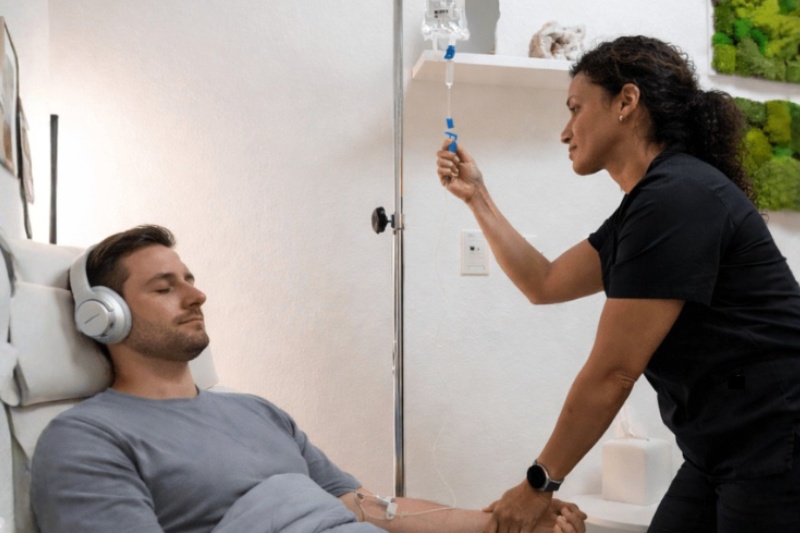
Ketamine infusion therapy uses a low dose of ketamine administered intravenously in a medical setting. IV delivery allows clinicians to control dosage precisely and monitor physical responses throughout the session.
Ketamine works differently from traditional antidepressants. Instead of primarily influencing serotonin or norepinephrine, it affects glutamate signaling — a system deeply involved in neural, connectivity and mood regulation. That distinction is one reason ketamine infusion is discussed in cases of treatment-resistant depression and PTSD.
Clinics like IV Solution & Ketamine Centers of Chicago emphasize structured medical oversight, patient screening, and post-infusion support as part of the process. The treatment itself is only one part of a broader clinical approach.
Ketamine infusion is not positioned as a replacement for therapy or long-term care. It is one tool, used thoughtfully.
Ketamine Infusion vs. Esketamine (Spravato®)
Spravato® is an FDA-approved nasal spray derived from ketamine, administered under clinical supervision. It is often paired with an oral antidepressant.
The key differences are practical rather than philosophical. Esketamine is absorbed through the nasal passages, while ketamine infusion enters directly into the bloodstream. That difference affects how precisely dosing can be adjusted.
Insurance coverage also varies. Spravato® may be covered by some plans, while IV ketamine therapy often involves out-of-pocket costs. The experience, timing, and clinical protocols differ as well.
Neither approach is universally “better.” The choice depends on medical history, treatment response, and physician guidance.
More information on esketamine can be found through the FDA and clinical summaries from organizations like the American Psychiatric Association.
Ketamine Infusion and Transcranial Magnetic Stimulation (TMS)
TMS uses magnetic pulses to stimulate specific regions of the brain associated with mood regulation. It does not involve medication and typically requires daily sessions over several weeks.
For some patients, TMS offers gradual improvement with minimal systemic side effects. For others, the time commitment or limited response becomes a factor.
Ketamine infusion differs in pace and mechanism. Infusions are typically spaced over weeks rather than daily, and the treatment affects neurochemical pathways rather than electrical activity.
In clinical conversations, ketamine infusion and TMS are sometimes discussed side by side — not as competitors, but as distinct options for different clinical profiles.
Where ECT Fits Into the Picture
Electroconvulsive therapy remains one of the most studied and effective treatments for severe, refractory depression. It is typically reserved for cases involving profound impairment or immediate risk.
ECT requires anesthesia and carries considerations related to memory and recovery time. For many patients, it is life-saving. For others, it feels like a step they are not ready to take.
Compared to ECT, ketamine infusion is less invasive and does not involve induced seizures. That distinction often matters emotionally, not just clinically.
Trauma-Focused Psychotherapy and Ketamine
PTSD treatment often centers on psychotherapy approaches like EMDR, prolonged exposure, or cognitive processing therapy. These methods aim to help the brain process traumatic memories in safer ways.
Ketamine infusion is not a form of psychotherapy. But some clinicians observe that it can create a temporary mental state where therapy feels more accessible. Not easy. Just less armored.
This is why clinics offering ketamine therapy frequently encourage coordination with mental health providers rather than separation from them.
The nervous system, after all, doesn’t respond well to silos.
What Makes One Option More Appropriate Than Another?
There is no single decision point. Suitability depends on diagnosis, treatment history, medical factors, and personal readiness.
Some individuals seek ketamine infusion in Chicago after years of medication trials. Others explore it alongside therapy. Some decide another advanced treatment feels like a better fit.
What matters most is informed choice — guided by clinicians who understand both the science and the uncertainty.
Chicago IV Solution outlines its treatment philosophy and evaluation process on its Why IV Solutions page, emphasizing medical oversight and individualized planning.
A Quiet Word About Expectations
Advanced treatments can offer relief. They can also disappoint. Honest conversations acknowledge both.
Ketamine infusion is not magic. Neither are TMS, ECT, or any other intervention. The brain is complicated. Healing is rarely linear.
Sometimes progress looks like feeling slightly more present. Slightly less overwhelmed. Just enough to keep going.
Those shifts count.
Closing Reflections
Comparing ketamine infusion with other advanced treatments for depression and PTSD isn’t about ranking options. It’s about understanding landscapes.
For Chicago patients exploring next steps, clarity can feel stabilizing. Knowing that multiple paths exist — each imperfect, each grounded in clinical intent — makes the journey less lonely.
And sometimes, that knowledge alone eases the weight a little.
To learn more about ketamine infusion therapy and the clinical approach used in Chicago, visit IV Solution & Ketamine Centers of Chicago.